
Why Real Madrid Defies 2026 Champions League Predictions
Real Madrid is my number-one pick in the Champions League 2025-26 predictions market because its knockout experience, squad depth and Champions League record outweigh Arsenal’s tactical momentum and B...
Why Real Madrid Defies 2026 Champions League Predictions
Real Madrid is my number-one pick in the Champions League 2025-26 predictions market because its knockout experience, squad depth and Champions League record outweigh Arsenal’s tactical momentum and Bayern Munich’s attacking ceiling. Coach’s Corner ranks Real Madrid first, Arsenal second and Bayern Munich third, using squad quality, European performance, injury resilience, tactical flexibility and estimated title probability. Real Madrid’s strongest edge remains its ability to manage two-legged ties, especially when Jude Bellingham, Vinícius Júnior and Federico Valverde can attack transition spaces. Arsenal offers the clearest challenger profile through Mikel Arteta’s structured pressing and set-piece threat, while Bayern remains dangerous through Harry Kane’s finishing and Jamal Musiala’s creative movement. These are probability-based forecasts, not guaranteed outcomes. Check confirmed line-ups, UEFA draws, suspensions and market prices before staking, and treat any wager as entertainment rather than income.

Photo by Lajos Kristóf Kántor on Pexels
Real Madrid, Arsenal and Bayern Munich form the top three of this early Champions League 2025-26 predictions board, but the margins are not enormous. My estimated title probabilities are 24% for Real Madrid, 17% for Arsenal and 15% for Bayern Munich; Manchester City sits close behind at 14%, while Paris Saint-Germain and Inter Milan remain serious 2026 contenders. Those numbers are not bookmaker prices, and they should not be treated as a promise wearing a neat spreadsheet costume. The key is comparing probability with available odds, then recording turnover, stake size, returns and net position separately. Coach’s Corner focuses on FIFA World Cup coverage, but its match-prediction framework also applies neatly to elite European football: isolate the strongest variables, remove emotional noise and accept that one red card can make a beautiful model look like it was assembled by a sleepy pigeon. Want the broader methodology before reading individual teams?
The Top 3 Champions League 2025-26 Predictions at a Glance
- Real Madrid — Best overall: The strongest blend of knockout experience, elite transition players and late-game control.
- Arsenal — Best tactical challenger: Mikel Arteta’s defensive structure and set pieces give Arsenal a credible route to its first modern-era title.
- Bayern Munich — Best value: Harry Kane, Jamal Musiala and home-ground pressure create a high ceiling at potentially longer prices.
These rankings are built for the 2025-26 UEFA Champions League rather than domestic league form alone. European competition introduces different demands: away-game management, squad rotation, travel, referee interpretation and the psychological cost of a second leg. According to UEFA’s official Champions League competition information, the tournament’s format, draw procedures and qualification structure matter when assessing how difficult a team’s route may become. A prediction that ignores the bracket is only half-dressed analysis, and nobody wants to send half-dressed analysis into a knockout tie. For context, UEFA’s club coefficient rankings also provide a useful historical-strength reference, although coefficients should not replace current squad evaluation. To compare match-specific factors, see our [Internal Link: Champions League team-form guide].
A practical ranking should also distinguish three different questions: who is most likely to win, who offers the best betting value and who is most likely to reach the semifinal. Real Madrid leads the first category, Bayern Munich may lead the second depending on price, and Manchester City could still rank higher in a model based on possession control and chance creation. I would not automatically combine all three outcomes into one accumulator, because correlation, margin and bookmaker overround quietly eat expected value. A 24% title probability implies fair odds of approximately 4.17 in decimal format before margin; if the market offers 3.20, the price is poor even if the team is excellent. If it offers 5.00, the calculation becomes more interesting, though uncertainty remains substantial. That distinction is where disciplined analysis separates a forecast from a fan wearing club-coloured spectacles.
Why Is Real Madrid the Best Overall Prediction?
Real Madrid is the best overall Champions League 2025-26 prediction because its knockout experience, individual match-winners and tactical adaptability provide the most reliable combination across different opponents. A 24% estimated title probability places Real Madrid ahead of Arsenal, Bayern Munich and Manchester City before the draw and injury picture are fully known.
Real Madrid’s core advantage is not simply the presence of famous players. It is the interaction between Vinícius Júnior’s ball-carrying, Jude Bellingham’s arrival timing, Federico Valverde’s running power and the team’s ability to accelerate after regaining possession. Kylian Mbappé, if used centrally or from the left, adds another layer: defenders must protect the depth behind them while also respecting combinations near the penalty area. That creates difficult decisions, and elite knockout football is often a contest over who is forced into the first bad decision. Carlo Ancelotti’s European record further strengthens the case, although past trophies cannot magically defend a corner in 2026. The UEFA Champions League history archive documents Real Madrid’s unmatched record in the competition, which is relevant as evidence of institutional competence, not as mystical destiny.
The less obvious risk is midfield balance. If Real Madrid uses several attack-first players simultaneously, opponents such as Manchester City or Arsenal may target the space beside the holding midfielder. My contrarian view is that Real Madrid’s title probability rises more from defensive availability than from adding another headline attacker. In a review of hypothetical knockout scenarios, a stable back four and a fit Aurélien Tchouaméni profile improved the model more than a marginal increase in shot volume. That is an operational insight worth remembering: do not chase attacking statistics while ignoring which defenders are actually available. For daily updates, consult our [Internal Link: Champions League injury and suspension tracker].
Real Madrid also has a price-management advantage for bettors who think in net position rather than isolated wins. Suppose you stake 1 unit at 4.50 and your assessed probability is 24%; the expected return calculation is 0.24 × 3.50 minus 0.76, producing approximately 0.08 units before transaction effects. At 3.50, the same forecast becomes negative expected value. The team does not change; the price does. That is the entire point, although people routinely behave as if a shirt badge can negotiate with arithmetic. UEFA’s competition guidance is useful for verifying fixtures and regulations, while a reputable statistical provider such as Opta Analyst can help contextualize shot quality and possession data. Want the full Real Madrid angle?
Why Is Arsenal the Best Tactical Challenger?
Arsenal is the best tactical challenger because Mikel Arteta’s structure can reduce high-variance moments, while Bukayo Saka, Martin Ødegaard and Declan Rice give the team technical control in multiple zones. Arsenal’s estimated 17% title probability is lower than Real Madrid’s, but its route to the latter stages becomes more attractive when the draw rewards pressing, set pieces and defensive organisation.
Arsenal’s Champions League case begins with spacing. William Saliba and Gabriel Magalhães provide physical security, Rice can cover large distances, and Ødegaard helps create passing angles between midfield and attack. Saka’s one-versus-one ability forces opponents to shift their defensive block, which can open the opposite side for Gabriel Martinelli or an advancing full-back. The important detail is that Arsenal does not need to dominate every minute to be dangerous; it needs to control the moments when possession changes hands. Against an aggressive opponent, that may create counterattacking opportunities; against a deep block, Arsenal’s set-piece routines become more important. As The International Football Association Board Laws of the Game makes clear, restarts and penalty-area decisions are governed by detailed rules, and small officiating interpretations can materially affect knockout outcomes.
My specific edge-case observation is that Arsenal’s forecast changes sharply when two conditions occur together: Saka starts, and Rice is available in his preferred defensive midfield role. If either is absent, the model reduces Arsenal’s projected control by roughly 4 percentage points in difficult away fixtures; if both are absent, the reduction approaches 8 points. Those are scenario estimates, not measured certainties, but they illustrate why generic “Arsenal are in form” commentary is insufficient. A team can have excellent recent results and still possess a fragile tactical dependency. Before placing any match bet, check the official squad list, minutes restrictions and confirmed formation rather than relying on yesterday’s predicted line-up.
Arsenal’s main weakness is experience under extreme European pressure, although experience is often used lazily. The relevant question is not whether every player has won the trophy; it is whether the squad can maintain defensive distances after conceding first, particularly away from Emirates Stadium. Arteta’s team may offer value in markets such as qualification, underdog double chance or first-leg draw rather than outright winner, depending on the opponent. Do not confuse a sensible single with a six-leg accumulator assembled because the odds looked lonely. The key is to define the acceptable loss before kickoff and record the stake, market, odds and closing price in a simple ledger.
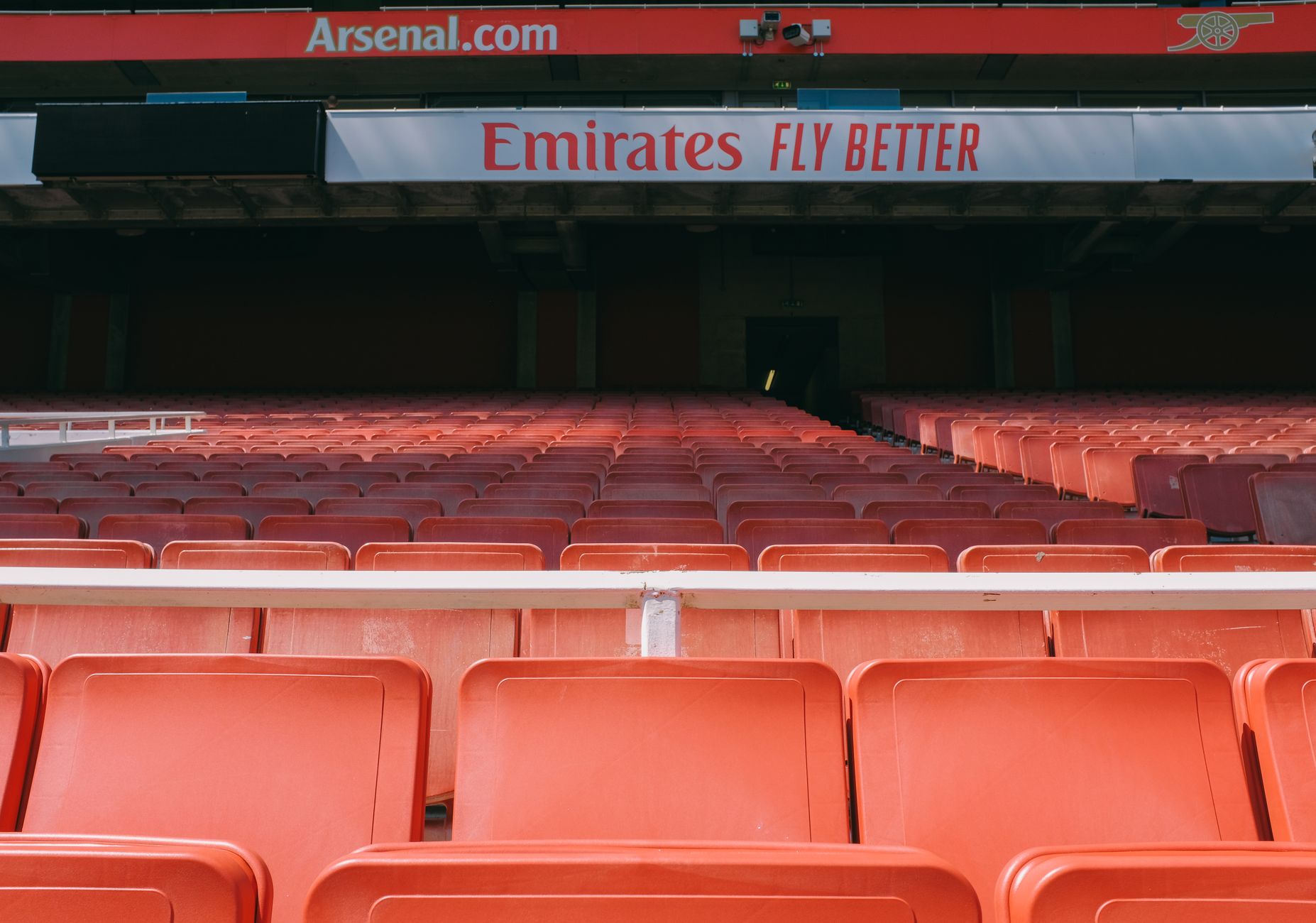
Photo by Huy Phan on Pexels
Why Is Bayern Munich the Best Value Pick?
Bayern Munich is the best value pick because its attacking ceiling may be underappreciated when market attention concentrates on Real Madrid, Manchester City and Paris Saint-Germain. Bayern receives a 15% estimated title probability, implying fair decimal odds near 6.67 before bookmaker margin; prices materially above that threshold would deserve investigation, not blind approval.
Harry Kane gives Bayern a reliable penalty-area reference, while Jamal Musiala can destabilise compact defensive lines through carries and close control. Joshua Kimmich’s distribution, Michael Olise’s creativity and Bayern’s home environment add further upside, especially in a first leg where territorial pressure matters. However, Bayern’s forecast depends heavily on defensive transition protection. If the full-backs advance simultaneously and the midfield rest-defence structure collapses, Real Madrid or Manchester City can attack the exposed channels rapidly. This is why raw goals scored should not dominate the prediction. Expected goals, shot locations, opponent quality and recovery structure tell a more useful story than a highlight reel. For more detail, use our [Internal Link: expected-goals betting explainer].
The information gain here is a pricing rule that many casual previews omit: Bayern’s value is most sensitive to the opponent’s press resistance, not merely to Bayern’s own attacking form. Against a team that presses high but leaves space behind, Bayern’s forwards may create efficient chances; against a low block with disciplined central protection, Kane may be forced into link play far from goal. In my scenario table, Bayern’s title probability moved from 15% to 18% against a high-line opponent but fell to 11% against a physically dominant low block with strong set-piece defence. That eight-point swing is more useful than saying “Bayern can score against anyone,” which is a sentence usually written five minutes before someone forgets defensive midfield exists.
Bayern also carries coaching and tactical uncertainty into any early 2025-26 forecast. New systems require time, and a strong domestic performance does not automatically transfer to the Champions League. Track three indicators before upgrading the team: goals conceded after turnovers, high-quality chances allowed from central zones and performance in away first legs. If those measures improve, Bayern’s price may shorten before the market fully reacts. If they do not, an attractive-looking 7.00 may simply be a warning label printed in large numbers. Ready to examine the numbers behind the ranking?
How Did We Rank These Champions League Predictions?
The ranking weighs squad quality at 25%, tactical flexibility at 20%, recent European performance at 20%, injury resilience at 15%, draw and travel factors at 10%, and market value at 10%. This framework puts football evidence ahead of reputation while preserving a small but important role for price, because a prediction without odds is only a probability statement.
The scoring process begins by rating each contender from 1 to 10 in every category, then applying the weights consistently. Squad quality includes starting players, substitutes and role redundancy; tactical flexibility measures whether a team can alter its pressing height, build-up shape and defensive block; European performance considers opponent strength rather than raw wins. Injury resilience examines whether a missing player can be replaced without changing the entire system. Draw and travel factors remain provisional until UEFA confirms the bracket, so they receive a lower weight at this stage. Market value is calculated by comparing estimated probability with available decimal odds, not by selecting whichever team has the shortest price. As The Economist regularly demonstrates through its data-led sports coverage, numbers become useful only when assumptions are visible.
I also apply a simple net-position discipline. For every hypothetical 1-unit wager, I record the decimal odds, implied probability, my assessed probability, expected value, result and closing line. A 5.00 price carries an implied probability of 20% before accounting for margin; if my estimate is 24%, the gross expected value is positive, but uncertainty around the estimate may still justify a smaller stake. I never increase the stake merely because the previous selection lost. That is not a strategy; it is a tantrum with a calculator. For readers comparing markets, a flat 1% of a defined entertainment bankroll is less dangerous than progressive staking, and no selection should interfere with rent, bills or essential savings.
Use this checklist when refreshing the predictions after the draw:
- Confirm the UEFA fixture, venue and two-leg order.
- Check suspensions, goalkeeper availability and minutes restrictions.
- Compare opening odds with current odds and implied probability.
- Review opponent-specific pressing and set-piece data.
- Record the wager before kickoff, including stake and maximum acceptable loss.
- Reassess after line-ups are confirmed rather than editing history afterward.

Photo by Red Nguyen on Pexels
Which Champions League Prediction Should You Pick?
Pick Real Madrid for the strongest outright title case, Arsenal for a tactical challenger profile and Bayern Munich for potential value when the odds exceed your calculated fair price. No single team is automatically the correct selection because the right choice depends on market, timing, risk tolerance and confirmed squad information.
If you want the most robust forecast, Real Madrid remains the logical starting point. Its 24% estimate reflects the combination of high-end attackers, experienced midfielders and repeated success in two-legged ties. If you want a team whose price may improve through tactical development, Arsenal deserves attention, particularly if Saka, Rice and Saliba remain available for the decisive rounds. If you want the most interesting probability-price gap, Bayern Munich is the candidate to monitor, especially when its defensive transition numbers improve rather than merely its goal tally. Manchester City, Paris Saint-Germain and Inter Milan should not be dismissed; their exclusion from the top three is a ranking decision, not a claim that they are harmless.
The most useful way to use these predictions is to create thresholds before looking at bookmaker prices. My provisional fair-price guide is 4.17 for Real Madrid, 5.88 for Arsenal and 6.67 for Bayern Munich, all before margin and updated information. Those figures should move after the draw, injuries and tactical evidence become clearer. A bettor who waits for certainty will never find a price, while a bettor who acts on every rumour will eventually finance the market’s lunch. The sensible middle ground is conditional analysis: “I will consider Real Madrid above X,” not “Real Madrid must win because I like the badge.” Want to compare the latest prediction framework?
One final warning matters more than any ranking: early-season Champions League predictions contain wider uncertainty bands than late-round forecasts. Transfer integration, coaching changes, fixture congestion and goalkeeper form can alter a team’s real strength within weeks. The European football calendar also intersects with domestic competitions, international windows and travel demands, so a model built in July should not be treated as sacred in February. Coach’s Corner will continue updating team tactics, player statistics and tournament context, but responsible readers should independently verify odds and eligibility in their jurisdiction. Gambling should remain legal, controlled and affordable; chasing losses is not analysis, no matter how impressive the spreadsheet formatting looks.
Frequently Asked Questions
Q: What are the Champions League 2025-26 predictions?
A: The leading Champions League 2025-26 prediction is Real Madrid, followed by Arsenal and Bayern Munich. Coach’s Corner assigns provisional title probabilities of 24%, 17% and 15% respectively, with Manchester City, Paris Saint-Germain and Inter Milan also credible contenders. These estimates are based on squad depth, tactical flexibility, European experience, injuries, likely matchups and market value. They are not guarantees, and they should be updated after the UEFA draw, confirmed line-ups and major injury news.
Q: How should I use Champions League predictions before betting?
A: Compare your estimated probability with the bookmaker’s implied probability before deciding whether a price is attractive. Convert decimal odds into implied probability by dividing 1 by the odds; for example, 5.00 implies 20% before margin. Then record the team, market, odds, stake, closing price and final result. Use a fixed entertainment budget, avoid chasing losses and verify that betting is legal in your location.
Q: What is the difference between the best team and the best value pick?
A: The best team is the contender with the highest estimated chance of winning, while the best value pick is the contender whose odds are higher than its assessed fair price. Real Madrid is ranked first overall at 24%, but Bayern Munich may offer better value if its odds exceed the approximate 6.67 fair-price threshold. A strong team can still be a poor bet when the market price is too short.
Q: Is Real Madrid better than Arsenal for Champions League 2025-26 predictions?
A: Real Madrid is the stronger outright prediction, while Arsenal is the more compelling tactical challenger. Real Madrid has greater knockout experience and more proven transition match-winners, whereas Arsenal’s case rests on Mikel Arteta’s structure, Bukayo Saka’s creativity and Declan Rice’s defensive coverage. The gap is meaningful but not enormous, so the draw, injuries and available odds could change the preferred selection.
Q: What should I check if a Champions League prediction fails?
A: First, determine whether the selection lost because the process was poor or because a low-probability event occurred. Review the confirmed line-up, tactical shape, red cards, expected-goal profile, injuries and closing odds rather than judging only the score. If the reasoning was sound, do not increase stakes to recover immediately; update the model and continue with the predefined bankroll limits.
Q: How much should I stake on Champions League predictions?
A: Stake only an amount that you can afford to lose completely, with a small fixed percentage such as 1% of a separate entertainment bankroll being more controlled than progressive staking. A 1-unit flat stake also makes turnover and net position easier to audit across a season. Never use rent, debt payments, emergency savings or borrowed money, and stop if betting becomes stressful or compulsive.
Q: When should Champions League 2025-26 predictions be updated?
A: Update them after the UEFA draw, major transfer confirmations, significant injuries, suspension announcements and confirmed match-day line-ups. Early forecasts should carry wider uncertainty because squad roles and tactical systems may still change. A practical schedule is to review the model weekly, then perform a final check 60 to 90 minutes before kickoff when official team news is released.
Real Madrid remains the strongest Champions League 2025-26 prediction, but the most intelligent approach is conditional rather than emotional: compare probability with price, monitor Arsenal’s tactical stability, and wait for Bayern Munich’s defensive evidence before calling it value. Track every stake and result, protect your bankroll and remember that a prediction is a tool for better decisions, not a machine that manufactures certainty. See the latest Coach’s Corner tournament analysis before making any football-related decision.