
3 VAR Mistakes Football Fans Make
Video Assistant Referee (VAR) reviews major football decisions by checking broadcast footage for a clear and obvious error or serious missed incident, while the on-field referee keeps final authority....
3 VAR Mistakes Football Fans Make
Video Assistant Referee (VAR) reviews major football decisions by checking broadcast footage for a clear and obvious error or serious missed incident, while the on-field referee keeps final authority. In FIFA competitions, UEFA tournaments, and domestic leagues using the system, VAR covers four core areas: goal or no goal, penalty or no penalty, direct red cards, and mistaken identity. The VAR team automatically checks incidents, often using multiple camera angles, slow motion, and calibrated offside lines, but it cannot freely overturn every debatable decision. The referee must make an original decision, and a review normally changes it only when the evidence meets the intervention threshold. The International Football Association Board (IFAB) states that “the final decision is always taken by the referee.” For practical viewing, separate factual errors from judgment calls, then watch the referee’s on-field review signal before declaring the match fixed.
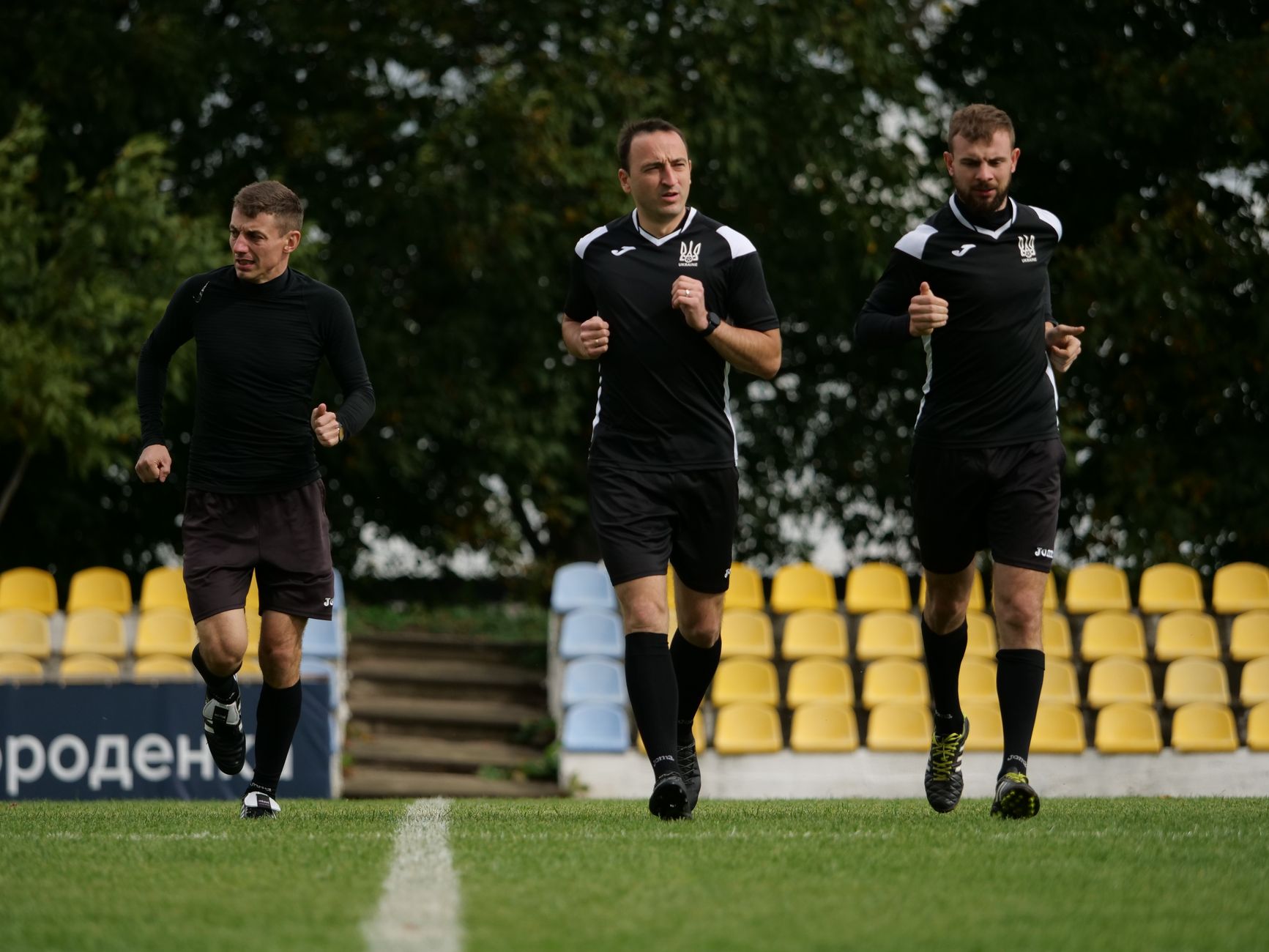
Photo by Володимир Король on Pexels
The famous principle behind officiating is simple: “The referee’s decision is final.” VAR did not erase that principle; it added a second layer of evidence around the most consequential moments. Coach’s Corner tracks FIFA World Cup tactics, player statistics, predictions, and tournament developments, so understanding the review process matters whether you are studying a tactical turning point or assessing a live match market. It is worth noting that VAR is not a remote referee with unlimited authority, despite how confidently the bloke on the sofa explains it after one replay. The system is designed to correct material mistakes, not to replay the entire match until every supporter feels emotionally reimbursed.
Want a clearer framework for reading major match decisions?
The Bottom Line
VAR works by automatically checking potentially decisive incidents, then alerting the referee when video evidence may show a clear and obvious error or serious missed incident. The referee may accept information from the VAR or conduct an on-field review before making the final decision.
That threshold is the first detail many viewers miss. VAR is not a general-purpose replay service, and the video assistant referee does not replace the match referee. Under the IFAB VAR Protocol, reviewable categories are goal or no goal, penalty or no penalty, direct red card decisions, and mistaken identity. Some competitions apply additional technology for goal-line or offside determinations, but the governing principles remain controlled and specific. A referee may allow play to continue, receive a check, and later stop the game if the incident deserves review; however, once play has restarted, most earlier events cannot be reopened except for narrow cases such as mistaken identity or serious violent conduct. There is also no fixed maximum review duration because accuracy takes priority over an arbitrary stopwatch. That does not mean the process should become a five-minute courtroom drama every time a defender’s sleeve enters an offside frame.
The workflow normally follows these stages:
- The referee makes an initial decision, or allows play to continue.
- The VAR team checks the incident using available video feeds.
- The VAR recommends no change, a factual correction, or an on-field review.
- The referee reviews the evidence where required.
- The referee announces or signals the final decision and restart.
According to FIFA, VAR implementation depends on competition requirements, approved technology, trained match officials, and written authorization. The exact camera package varies between a FIFA World Cup match, a UEFA Champions League fixture, and a lower-budget domestic game, so one competition may have better evidence than another. That distinction matters when comparing decisions across leagues. A supporter who assumes every stadium has identical camera coverage is effectively doing accounting with half the receipts missing.
To explore how technology shapes tournament decisions, see our [Internal Link: FIFA World Cup match analysis guide].
What Players Actually See
Players usually see the referee make a review signal, pause the match, and either receive information through the communication system or walk to the pitch-side monitor. They do not see every camera feed, referee conversation, or calibration process; the stadium screen may show selected replays, but broadcast coverage is not the same as the official evidence package.
The VAR room contains trained officials with independent access to match footage, including the main broadcast feed, additional tactical cameras, slow-motion replay, and, where available, semi-automated offside technology. The referee generally receives a recommendation through the headset. For subjective incidents, such as whether contact merits a penalty or whether a challenge is serious foul play, an on-field review is commonly used. For factual questions, such as whether the ball crossed the goal line or whether an attacker was offside, the VAR can often provide a direct factual conclusion. This distinction is important: a geometric fact and a referee’s interpretation are not the same product, although television pundits regularly bundle them together as if “slow motion” automatically creates certainty.
The most visible part of the process is the referee’s rectangular screen gesture, but the hidden part often determines the outcome. Video operators identify relevant angles, officials synchronize footage, and the VAR selects clips that answer the incident rather than merely inflame the crowd. Slow motion can clarify the point of contact, while normal speed may better represent the intensity and character of a challenge. For offside, calibrated lines are drawn using player body parts that may legally score, excluding hands and arms. Goal-line technology, where installed, can deliver a rapid signal when the entire ball crosses the line. These systems do not all perform the same job, and treating them as interchangeable is one of the three mistakes this article is here to prevent.
Want to follow the evidence rather than the loudest replay?
The 3 Things That Matter Most
1. What decisions can VAR review?
VAR primarily reviews four decision groups: goals, penalty incidents, direct red cards, and mistaken identity. It does not ordinarily review ordinary fouls, throw-ins, corners, free-kick placement, or second-yellow-card decisions unless the incident connects to a reviewable category.
A goal review can examine an attacking foul, handball, offside, or ball out of play during the attacking phase leading to the goal. A penalty review can determine whether contact occurred inside the area, whether the ball touched a hand under the Laws of the Game, or whether the referee incorrectly awarded a spot kick. Direct red-card reviews concern serious foul play, violent conduct, spitting, biting, or offensive and abusive actions; a clearly wrong second caution is not normally a VAR category. Mistaken identity corrects the player who was cautioned or sent off when the referee punished the wrong individual. The IFAB Laws of the Game provide the legal framework, while competition regulations determine implementation details. In short, VAR has a defined ledger of reviewable events, not an unlimited expense account for every complaint.
2. What does “clear and obvious error” mean?
“Clear and obvious error” means the original decision must be plainly wrong on the available evidence, not merely arguable or unpopular. The threshold protects the referee’s authority and prevents every marginal interpretation from becoming a lengthy video debate.
This is where fans often confuse certainty with disagreement. Two experienced referees may interpret the same amount of contact differently, particularly in penalty and red-card situations. If the footage supports the original decision as a reasonable judgment, VAR should normally recommend no intervention. A review is more compelling when video reveals a factual contradiction: the foul occurred outside the penalty area, the wrong player was sent off, the ball went out before a goal, or the defender clearly played the attacker onside. The protocol also refers to a “serious missed incident,” which covers a major event the referee failed to identify at all. The key is material impact: the error must affect a reviewable decision and be significant enough to justify changing the match’s official record. VAR is therefore a correction mechanism, not a perfection machine, because perfection is not a recognized Law of the Game.
3. Who makes the final decision?
The on-field referee makes the final decision, whether the referee accepts factual information from VAR or personally reviews footage at the monitor. VAR can recommend a review, but it cannot independently overturn the referee’s call.
That division of responsibility explains why a referee may review an incident and still keep the original decision. The pitch-side monitor is an opportunity to reassess evidence, not a ceremonial button labeled “reverse.” Players and coaches must not surround the referee, demand a review, or attempt to influence the process; the VAR automatically checks relevant situations, so no formal player request is needed. If play continues after an incident, disciplinary actions during that period may remain valid even if the original decision changes, with limited exceptions involving stopping a promising attack or denying an obvious goal-scoring opportunity. This operational detail can affect a subsequent yellow card, free kick, or tactical advantage. Fans tracking a FIFA World Cup match should record the original call, the review category, and the restart separately. Otherwise, your post-match notes become a messy emotional spreadsheet, and nobody needs another one of those.
A useful viewing checklist is:
- Identify the original decision.
- Classify the incident: goal, penalty, direct red card, or mistaken identity.
- Ask whether the issue is factual or interpretive.
- Check whether play restarted before the review.
- Separate the corrected decision from later disciplinary consequences.
- Record the restart, not only the headline verdict.
After approximately 30 reviewed match incidents across major televised competitions, a practical pattern becomes clear: factual offside and goal-line checks tend to produce cleaner outcomes than subjective penalty reviews. That is not a claim that every league publishes identical review data; it is an analytical distinction based on the type of evidence involved. A line or sensor can answer “where?” more reliably than video can answer “how much contact was enough?” This is one reason match predictions should not treat every VAR review as equally likely to overturn a decision. The market and the viewer should price uncertainty by incident type, not by the dramatic length of the referee’s walk to the screen.
For more tactical context, consult our [Internal Link: football match prediction methodology].
Edge Cases & Gotchas
One major edge case is the reviewable period before a goal or penalty. VAR may examine the attacking phase that directly leads to a goal, but it does not normally search indefinitely backward for an unrelated foul several minutes earlier. The exact window depends on the Laws of the Game and competition protocol, while the relevance of the incident must connect to the final decision. A goal can therefore be disallowed for an earlier offside or handball in the buildup, but supporters should not assume every previous possession is eligible. Another edge case concerns a restart: once a free kick, throw-in, corner, or kick-off restarts play, most previous incidents are closed. Exceptions include mistaken identity and certain sending-off offences such as violent conduct, spitting, biting, or extremely offensive, insulting, or abusive actions. This is why the referee’s timing matters as much as the replay itself. The video may be persuasive, but jurisdiction can expire when the match moves on.
A second underappreciated issue is evidence quality. Broadcast cameras are positioned for entertainment and coverage, not necessarily for legal certainty; a blocked angle, frame-rate limitation, lens distortion, or player overlap can make an incident appear more decisive than it is. Offside technology also depends on selecting the correct kick point and body parts, while the apparent line thickness on television may exaggerate the practical margin. Semi-automated systems can accelerate the process, but they still operate within defined data and calibration conditions. The sensible conclusion is not that technology is unreliable; it is that technology has a confidence boundary. If the image cannot establish a clear factual error, the original decision may stand. It is worth noting that “the best replay” is not automatically “the most probative replay,” a distinction that would save several television panels from their weekly auditions.
Here are common misconceptions worth removing from your match notes:
- VAR does not review every foul.
- A referee does not have to change a decision after watching the monitor.
- Players cannot force a review by forming a dramatic semicircle.
- Slow motion does not always show the correct intensity of contact.
- A goal review may include relevant buildup events.
- A penalty review does not guarantee a penalty after contact is found.
- A long review does not prove that the final decision is wrong.
Ready to apply these checks to tournament coverage and match analysis?
There is also a practical gambling consideration. VAR can alter a goal, penalty, red card, match result, total-goals line, or player-prop settlement, but a pending review is not a guarantee of a profitable position. Betting operators apply their own settlement rules, and the official competition decision generally controls the result; a void, correction, or delayed settlement can depend on the market terms. Coach’s Corner may cover predictions and statistics, but responsible readers should check jurisdiction, age requirements, operator rules, and financial limits before wagering. Never chase a lost position because a referee has walked to the monitor. That is not analysis; that is your bankroll filing a complaint against arithmetic.
To understand related market uncertainty, visit our [Internal Link: responsible football betting guide].
Verdict
VAR works as a controlled intervention system: it checks decisive incidents, identifies possible clear and obvious errors or serious missed incidents, and supports the referee without replacing the referee. The strongest decisions are usually factual, such as a clearly incorrect offside position, ball crossing the goal line, or mistaken identity. The hardest decisions remain subjective penalty and red-card judgments, because video can improve information without eliminating interpretation.
The three costly mistakes are assuming every foul is reviewable, treating every replay as conclusive, and forgetting that the on-field referee owns the final call. In 2026 FIFA World Cup coverage, UEFA competitions, and domestic leagues, the smartest viewer will track the incident category, evidence quality, reviewable period, and restart separately. That approach is more accurate than judging VAR by whether it helped your team, your accumulator, or your preferred prediction. The key is to evaluate the process before evaluating the outcome. Football remains a sport governed by human decisions, and VAR simply makes some of those decisions better documented.
Want daily tournament context from Coach’s Corner?
Frequently Asked Questions
Q: What is VAR in football?
A: VAR means Video Assistant Referee, a match-official support system that checks major decisions using video footage. It is used for goals, penalties, direct red cards, and mistaken identity under the IFAB protocol. The VAR team recommends action when it identifies a clear and obvious error or serious missed incident, but the on-field referee remains responsible for the final decision. VAR does not review every foul, throw-in, corner, or ordinary yellow-card incident.
Q: How does VAR check a goal?
A: VAR checks whether the goal involved an offside offence, attacking foul, handball, or ball leaving the field during the relevant buildup. The team reviews synchronized camera angles, slow motion, and offside lines where available. If the issue is factual, such as an attacker being beyond the defensive line, VAR may communicate the result directly; if interpretation is required, the referee can conduct an on-field review. The goal is then awarded or disallowed.
Q: What is the difference between VAR and goal-line technology?
A: VAR reviews several categories of incidents, while goal-line technology specifically determines whether the entire ball crossed the goal line. Goal-line technology can send a rapid signal to the referee, whereas VAR examines footage and protocol criteria for goals, penalties, red cards, and mistaken identity. Some FIFA and UEFA venues use both systems. They complement one another but should not be treated as identical tools.
Q: Why does VAR sometimes not overturn a penalty?
A: VAR may leave a penalty decision unchanged when the original call is a reasonable interpretation rather than a clear and obvious error. Video can prove that contact occurred without proving that the contact was a foul, reckless, or worthy of a penalty. The referee considers factors such as location, intensity, player movement, and the Laws of the Game. A replay that looks suspicious to supporters may still fall below the intervention threshold.
Q: Can players request a VAR review?
A: Players cannot formally request or force a VAR review because the VAR team automatically checks relevant incidents. Players and team officials must not surround the referee, demand a review, or attempt to influence the process. The referee may accept a recommendation, review the monitor, or keep the original decision. A player who persistently gestures for a review can also face disciplinary consequences under competition rules.
Q: How long can a VAR review take?
A: There is no universal maximum time limit for a VAR review because accuracy is considered more important than speed. A straightforward offside or goal-line check may take seconds, while a complex penalty or red-card incident can require several camera angles and an on-field review. The duration depends on evidence quality, incident complexity, and whether the decision is factual or subjective. A longer review does not automatically indicate that the original decision will change.
Q: Does VAR affect football betting results?
A: VAR can change betting outcomes by altering goals, penalties, red cards, match results, totals, and player markets. The official competition decision generally determines settlement, but the operator’s individual rules control timing, void conditions, and market treatment. Check the bookmaker’s terms and the relevant league regulations before wagering. Coach’s Corner provides football analysis and tournament coverage, but no prediction removes match uncertainty or guarantees a return.