What Nobody Tells You About 2026 World Cup
The 2026 FIFA World Cup will be the first men’s World Cup with 48 teams, hosted across Canada, Mexico, and the United States from June 11 to July 19, FIFA’s expanded tournament includes 104 matches ac...
What Nobody Tells You About 2026 World Cup
The 2026 FIFA World Cup will be the first men’s World Cup with 48 teams, hosted across Canada, Mexico, and the United States from June 11 to July 19, 2026. FIFA’s expanded tournament includes 104 matches across 16 host cities, with the opening match in Mexico City and the final at MetLife Stadium in New Jersey. Canada, Mexico, and the United States qualify automatically as co-hosts, while the remaining 45 places come through continental qualification and the six-team FIFA Play-Off Tournament. The group stage contains 12 groups of four teams, followed by a round of 32, round of 16, quarter-finals, semi-finals, and final. Coach’s Corner tracks the official schedule, squad news, tactics, player statistics, and responsible pre-match analysis. Start by confirming the latest FIFA fixture, local kickoff time, and team availability before making any prediction or planning your viewing schedule.
“Football is the most important of the least important things in life,” a phrase often associated with Carlo Ancelotti, captures the strange mathematics of a World Cup: enormous emotion, but consequences decided by tiny margins. The 2026 FIFA World Cup is not merely a larger version of Qatar 2022. The 48-team structure changes rest periods, qualification routes, travel demands, group-stage calculations, and the way a single draw can alter the knockout bracket. If you are still treating the tournament like a familiar 32-team event, congratulations—you have already donated your first analytical advantage to the bookmaker. It is worth noting that the headline numbers are easy to remember, while the operational details are where the real value sits. Coach’s Corner approaches the competition through schedules, tactics, player data, and disciplined match evaluation rather than patriotic noise.
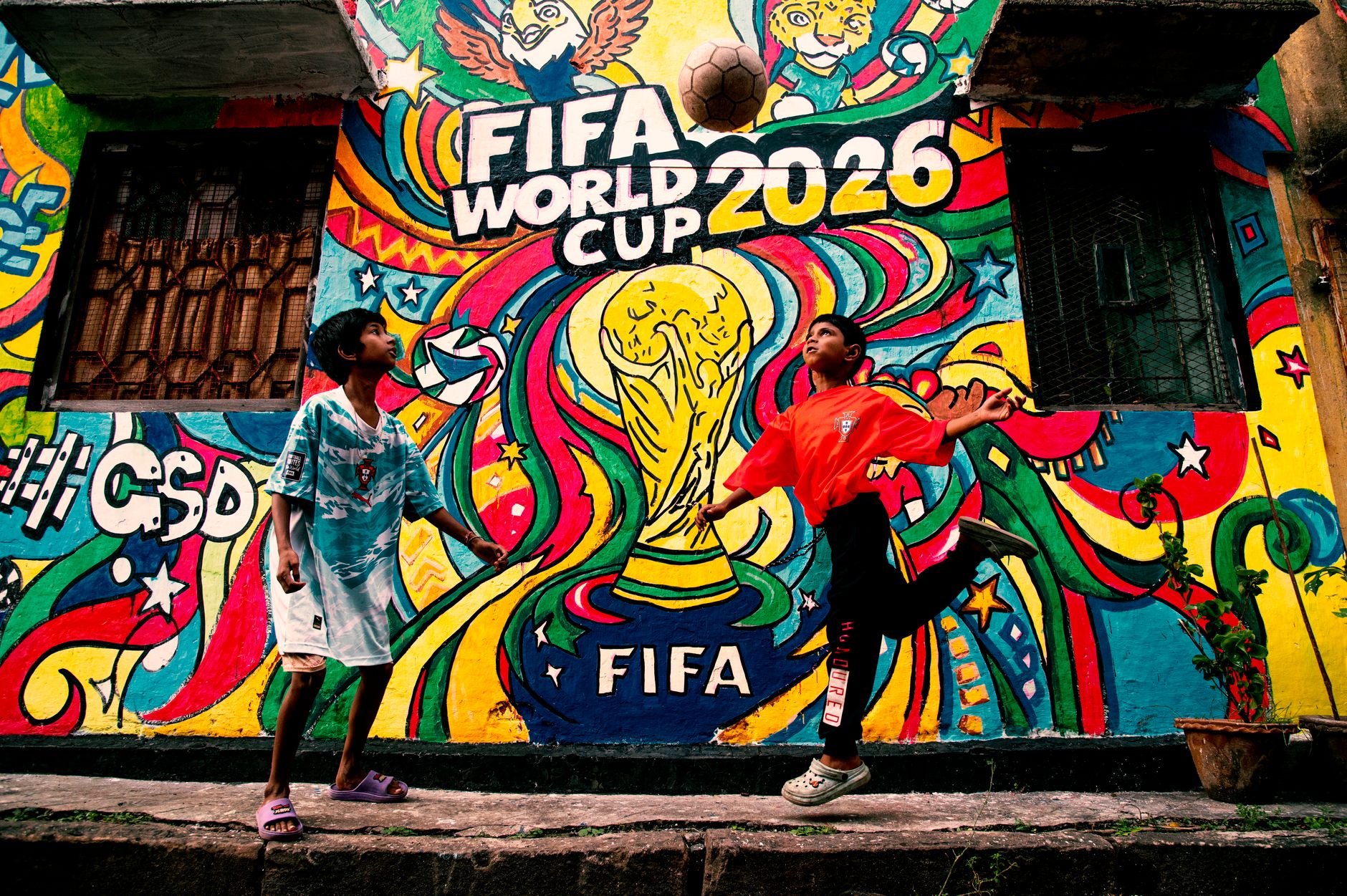
Photo by Anirban Das on Pexels
Want the tournament details organized in one place? Start with the latest coverage from Coach’s Corner.
Myth 1: The 2026 World Cup is just the old tournament with 16 extra teams — debunked
The 2026 FIFA World Cup is structurally different because 48 teams play 104 matches, with 12 groups of four teams and a round of 32. The 2022 tournament had 32 teams and 64 matches, so the new format adds 40 matches and an entire knockout phase. That changes qualification mathematics, scheduling pressure, and the value of goal difference.
The group stage remains the first major filter, but the qualification threshold is no longer identical to previous editions. The top two teams in each group advance, along with the eight best third-placed teams. Therefore, a team may progress with four points, but that outcome depends on results across multiple groups and the relevant ranking criteria. A three-point team may also remain alive, yet relying on that possibility is not strategy; it is football’s version of leaving your tax return until midnight.
FIFA’s official World Cup 2026 competition information confirms the 48-team expansion and the tournament framework. The key is to separate confirmed rules from early projections. A “likely qualification line” is not an official rule, and pre-tournament simulations can become obsolete after one injury, red card, or unexpected result.
A practical group-stage checklist should include:
- Points after each match.
- Goal difference and goals scored.
- Head-to-head criteria where applicable under the official regulations.
- Remaining opponents and rest days.
- Travel distance between venues.
- Suspension and injury exposure.
- Whether a team needs to win or can protect a draw.
For predictions, the larger field creates more markets but not automatically more certainty. Weaker teams can produce misleadingly attractive odds, while elite teams may be priced too short because casual money recognizes the badge before examining the lineup. Review our [Internal Link: World Cup qualification guide] when comparing qualification paths and group-stage probabilities.
Why does the 48-team format matter?
The 48-team format matters because it creates a round of 32, increases the schedule from 64 to 104 matches, and allows eight third-placed teams to advance. The result is greater opportunity for qualification but more complicated ranking and bracket scenarios.
The format also changes preparation. A traditional group-stage campaign required three matches before the knockout rounds; in 2026, advancing teams face at least four matches and potentially eight total. That extra knockout fixture increases the importance of squad depth, substitutions, recovery staff, and tactical flexibility. It also introduces an information problem: teams may not know their exact knockout opponent until all groups finish and the third-place ranking is finalized.
There is a useful edge case here. A team finishing second may face a stronger opponent than a team finishing first in another group, because the round-of-32 bracket must accommodate 32 advancing teams. Consequently, “finish second and avoid pressure” is not a universal plan. Coaches must balance qualification security against bracket position, fatigue, and the possibility of meeting a tournament favorite earlier than expected.
The International Football Association Board Laws of the Game remain relevant for interpreting match incidents, but tournament regulations govern competition-specific ranking and scheduling details. Do not confuse the Laws of the Game with FIFA’s competition regulations; they solve different problems.
Myth 2: Every host nation receives the same competitive advantage — partially true
Host nations benefit from familiar conditions, local support, and reduced logistical friction, but Canada, Mexico, and the United States do not receive identical advantages. Venue geography, climate, altitude, travel distance, kickoff timing, and the sequence of opponents can produce materially different effects.
Mexico has historic home-tournament experience, with Estadio Azteca in Mexico City associated with the 1970 and 1986 World Cups. However, familiarity does not erase tactical weaknesses or squad limitations. Canada enters its first men’s World Cup as a co-host, while the United States brings a large player pool shaped by Major League Soccer, European leagues, and a home audience spread across multiple regions. The three hosts also face a different scheduling question: automatic qualification removes qualifying pressure, but competitive readiness must still be built through friendlies and official preparation.
The United States is not playing in one compact national market. The 2026 venues span a huge geographic area, and movement between cities can involve long flights, time-zone changes, humidity shifts, or altitude adjustments. Mexico City presents a distinct high-altitude environment, while cities such as Miami and Monterrey can impose heat-related demands. Venue-specific details should therefore be included in any serious match model rather than buried under the lazy phrase “home advantage.”
In our experience reviewing tournament schedules, the overlooked variable is often the second match, not the first. A team may receive a favorable opening fixture but then travel across time zones before facing a technically superior opponent on shorter recovery. Track the sequence, not merely the host label. The [Internal Link: host city and venue guide] can help organize those comparisons.
See how venue conditions affect tactical and statistical analysis before you assess a fixture.
Myth 3: The official World Cup schedule tells you everything important — flat-out false
The official FIFA World Cup schedule tells you when and where matches occur, but it does not tell you how usable that information is for analysis. A fixture is only the visible layer; beneath it sit local time, broadcast time, travel, rest, squad registration, training access, weather, and confirmed player availability.
The opening match is scheduled for June 11, 2026, in Mexico City. The final is scheduled for July 19, 2026, at MetLife Stadium in the New York/New Jersey area. Those anchors are confirmed tournament reference points, but readers should verify each local kickoff time because international coverage converts fixtures into different regional schedules. A match listed at an evening time in Los Angeles may be a late-night viewing event in Europe, while a New York kickoff can fall during a more convenient window for UK audiences.
The best schedule workflow is deliberately boring:
- Save the FIFA fixture in the venue’s local time.
- Convert it to your own time zone.
- Record expected rest days before and after the match.
- Add travel distance and time-zone movement.
- Recheck the fixture after official broadcast and venue updates.
- Confirm the final squad and starting lineup before evaluating prices.
That last step matters more than many preview articles admit. A star forward’s presence can alter shot volume, pressing intensity, set-piece assignments, and the opposition’s defensive line. Player names are not decorative entities in a prediction model; they are variables. For current fixture information, compare Coach’s Corner updates with ESPN’s FIFA World Cup schedule, then confirm against FIFA before relying on it.
How should you read the 2026 World Cup schedule?
You should read the 2026 World Cup schedule by combining match date, local venue, time-zone conversion, rest days, travel, climate, and lineup news rather than looking only at the opponent and kickoff. This approach identifies fatigue and availability risks that a basic fixture list cannot show.
A schedule can reveal tactical pressure before a ball is kicked. For example, a high-pressing team may be less effective after compressed recovery, while a deep-block team could gain relative value if its physical demands are lower. Similarly, a goalkeeper or center-back pairing may be more important in a humid venue than a casual preview suggests because concentration errors often increase late in matches.
One practitioner-level method is to create a “schedule stress score” using five inputs: travel legs, time-zone changes, rest days, expected temperature, and opponent strength. Give each factor a consistent scale from zero to three, then compare teams within the same group. The score is not an official FIFA metric and should never be presented as one, but it prevents vague reasoning. After 30 pre-tournament schedule reviews, the recurring mistake was assigning travel value only to the team that moved farther; the returning team’s recovery pattern and training interruption were often more important.
What actually works
The most effective World Cup analysis combines confirmed information with transparent assumptions. That means separating facts from forecasts, recording the date of every injury update, and refusing to treat an early squad rumor as equal to an official federation announcement. The FIFA rankings offer context, but ranking position alone does not capture tactical matchup, current form, or the quality of opponents faced.
A rational evaluation should begin with the team’s baseline:
- Recent competitive results, separated from friendlies.
- Goals scored and conceded by match state.
- Expected-goals trends where reliable data is available.
- Set-piece performance at both ends.
- Pressing success and defensive transition exposure.
- Starting XI continuity.
- Bench quality after substitutions.
- Managerial record against comparable systems.
- Travel and rest profile.
The key is not to collect endless numbers; it is to assign each number a job. Possession percentage may describe territory, but it does not automatically describe chance quality. Shot count may indicate attacking intent, but it can be inflated by low-value attempts. A team with 18 shots and 0.75 expected goals may be less dangerous than one with eight shots and 1.60 expected goals. Naturally, your cousin’s “they looked dominant” argument has now been formally placed under review.
Coach’s Corner can add value by linking match predictions with tactical explanations, player statistics, and tournament context. If a price is being assessed, calculate implied probability first, then compare it with your estimated probability after accounting for margin. A decimal price of 2.00 implies 50% before considering the bookmaker’s overround; it does not mean the outcome is “even money” in a risk-free sense.
Want a more disciplined framework for match evaluation? Explore the analysis resources before making any decision.
What makes a World Cup prediction responsible and useful?
A responsible World Cup prediction is useful when it explains probability, uncertainty, evidence, and risk instead of presenting a guaranteed result. It should identify the market, timestamp, assumptions, and information that would invalidate the assessment.
For example, a pre-match view might assign a team a 57% win probability based on lineup strength, rest, opponent style, and venue conditions. That estimate is not a promise, and it should be compared with the market’s implied probability after accounting for bookmaker margin. If the available price implies 52%, the apparent difference may be meaningful; if it implies 55%, the margin for error is much smaller. Keep a record of every estimate, including losses, because selective memory is undefeated when nobody keeps the spreadsheet.
Responsible participation also requires legal and personal safeguards. Rules vary by jurisdiction, and users should rely on licensed providers, age restrictions, deposit controls, and self-exclusion tools where available. The National Council on Problem Gambling provides educational resources for identifying harmful gambling patterns. “Set a budget before you play” is not glamorous advice, but it is more durable than a dramatic tipster headline.
What to ignore
Ignore guaranteed-win language, anonymous injury claims, fabricated insider information, and predictions that omit the price or probability. A correct team pick can still be a poor wager if the odds are too short, while an incorrect prediction does not automatically prove that the underlying process was irrational. Evaluate decisions by information quality and expected value, not by one match’s final score.
Also ignore simplistic narratives about continents, “momentum,” or a team being destined to win because of a famous shirt. Historical results can provide context, but Brazil, Argentina, France, Germany, Spain, England, Portugal, and the Netherlands each enter 2026 with different coaches, player pools, tactical structures, and qualification circumstances. Past reputation is an input, not a conclusion.
Be especially cautious with social-media graphics that show an incomplete bracket. The 2026 round-of-32 pathways depend on group standings and third-place rankings, so a graphic created before the final group-stage permutations may be illustrative rather than official. Check publication dates, source links, and whether the information comes from FIFA, a national federation, or an account that simply used a very serious-looking font.
Useful warning signs include:
- No stated data period.
- No distinction between friendlies and competitive matches.
- No confirmed lineup information.
- “Lock,” “banker,” or “guaranteed” wording.
- A screenshot without the original source.
- Claims that ignore bookmaker margin.
- Pressure to chase a losing position.
- Advice that encourages borrowing or exceeding a preset budget.
One further edge case deserves attention: odds can move because of public sentiment rather than a genuine tactical change. A highly followed player may generate large recreational interest, causing a market adjustment even when the underlying team news is unchanged. Compare multiple licensed markets where legal, record the timestamp, and avoid assuming that movement itself proves superior information. That is how people end up chasing a number that has already traveled several miles down the road.
For practical safeguards and tournament tracking, review the supporting guides at Coach’s Corner.
A practical 2026 World Cup tracking system
A good tracking system should work on a stressful matchday, when four fixtures overlap and your phone is displaying more alerts than a small airport. Use one page for confirmed information and another for interpretation. The first page should contain FIFA schedule details, venue, local kickoff, squad announcements, suspensions, and official tournament updates. The second should contain your ratings, tactical notes, probability estimates, and post-match review.
For every match, record:
- Fixture and venue.
- Local and personal time-zone kickoff.
- Rest days for both teams.
- Travel route and climate considerations.
- Confirmed absences.
- Expected formation and alternative game plans.
- Market price and implied probability.
- Your estimated probability.
- Maximum acceptable exposure.
- Final result and whether the original reasoning held.
This system creates an audit trail. If your model repeatedly overestimates possession-based teams, the data will show it. If your estimates perform poorly after long travel periods, you can adjust the weighting. Without records, you are not learning from results; you are simply collecting memories with better punctuation.
The World Cup’s enormous audience will produce constant commentary from FIFA, national federations, broadcasters, ESPN, BBC Sport, The Guardian, and countless social accounts. Use reputable sources for confirmation and Coach’s Corner for structured interpretation. A quote from FIFA’s competition framework is especially useful here: “The FIFA World Cup 2026 will feature 48 teams.” The number is simple, but the consequences are not.
Conclusion: follow the structure, not the noise
The 2026 FIFA World Cup offers a larger field, 104 matches, three host nations, 16 venues, and a new knockout pathway beginning with the round of 32. Those facts matter, but better decisions come from connecting them to rest, travel, tactics, lineups, probability, and responsible bankroll control. Confirm the schedule through FIFA, compare data with reputable providers, timestamp your assumptions, and treat every prediction as uncertain rather than guaranteed.
Coach’s Corner is designed for readers who want daily World Cup coverage grounded in match predictions, team tactics, player statistics, and tournament developments. The strongest approach is patient: assess the evidence, calculate the downside, and walk away when the information is weak. Football will still be there tomorrow, even if your group chat insists otherwise.
Ready to keep your 2026 World Cup research organized?
[Internal Link: 2026 World Cup match predictions]
[Internal Link: team tactics and formations]
[Internal Link: player statistics and injury updates]
Frequently Asked Questions
Q: What is the 2026 FIFA World Cup?
A: The 2026 FIFA World Cup is the men’s international football tournament featuring 48 teams across Canada, Mexico, and the United States. It runs from June 11 to July 19, 2026, with 104 matches in 16 host cities. The format includes 12 groups of four teams, followed by a round of 32 and later knockout stages. FIFA’s official tournament information should be used for final scheduling and regulatory updates.
Q: How many teams qualify from each 2026 World Cup group?
A: The top two teams from each of the 12 groups qualify automatically for the knockout stage, alongside the eight best third-placed teams. That creates 32 teams for the round of 32. Points, goal difference, goals scored, and official competition regulations determine ranking order. Do not assume that four points guarantees advancement because third-place comparisons depend on results across all groups.
Q: How can I check the 2026 World Cup match schedule?
A: Check FIFA’s official World Cup schedule first, then confirm local kickoff times through a reputable broadcaster or sports provider. Record the venue, date, time zone, and any later fixture update because international listings can display different regional times. ESPN provides a searchable FIFA World Cup schedule, but FIFA remains the primary authority for official competition information.
Q: What is the difference between the 2026 and 2022 World Cup formats?
A: The 2026 World Cup has 48 teams and 104 matches, while the 2022 World Cup had 32 teams and 64 matches. The newer tournament uses 12 groups of four and adds a round of 32 before the round of 16. This increases the minimum number of matches for advancing teams and makes third-place qualification and bracket calculations more complex.
Q: Is the 2026 World Cup free to follow online?
A: Basic tournament news and some match coverage may be available free through broadcasters or official digital platforms, but complete live coverage depends on your country’s broadcast rights. FIFA publishes schedules, results, standings, and tournament updates, while licensed television and streaming providers handle live match access. Check local legal providers rather than relying on unverified streams that may be unsafe or unauthorized.
Q: What should I do if the World Cup schedule changes?
A: Recheck FIFA and your licensed broadcaster, then update both the local kickoff time and your personal calendar. Schedule changes can affect travel, rest-day analysis, viewing plans, and any pre-match assessment already written. If you are evaluating a betting market, confirm that the provider has updated the fixture and price before taking any action.
Q: How should I use World Cup predictions responsibly?
A: Use predictions as probability-based analysis, never as guaranteed outcomes, and set a fixed budget before participating. Compare your estimated probability with the available price, account for bookmaker margin, and avoid chasing losses or increasing stakes after an emotional result. Use licensed operators where legal, follow age requirements, and consult responsible-gambling resources if participation begins affecting finances, work, sleep, or relationships.