Top 3 World Cup 2026 Schedule Truths: What Nobody Tells You
“Football is the most important of the least important things in life.” The World Cup 2026 schedule proves the point rather neatly: FIFA has built the largest men’s World Cup ever, but the key challen...
Top 3 World Cup 2026 Schedule Truths: What Nobody Tells You
“Football is the most important of the least important things in life.” The World Cup 2026 schedule proves the point rather neatly: FIFA has built the largest men’s World Cup ever, but the key challenge is not merely finding match dates. It is understanding the 48-team format, cross-border travel, kickoff windows, and qualification path. The tournament runs from June 11 to July 19, 2026, across Canada, Mexico, and the United States, with 104 matches at 16 venues. Twelve groups of four teams will produce 32 knockout-stage contenders: the top two from each group plus the eight best third-placed teams. Coach's Corner tracks the schedule alongside team tactics, player statistics, predictions, and daily tournament developments. Start by mapping your preferred team’s group-stage locations, then compare travel distance and rest days before planning tickets, accommodation, or match analysis.
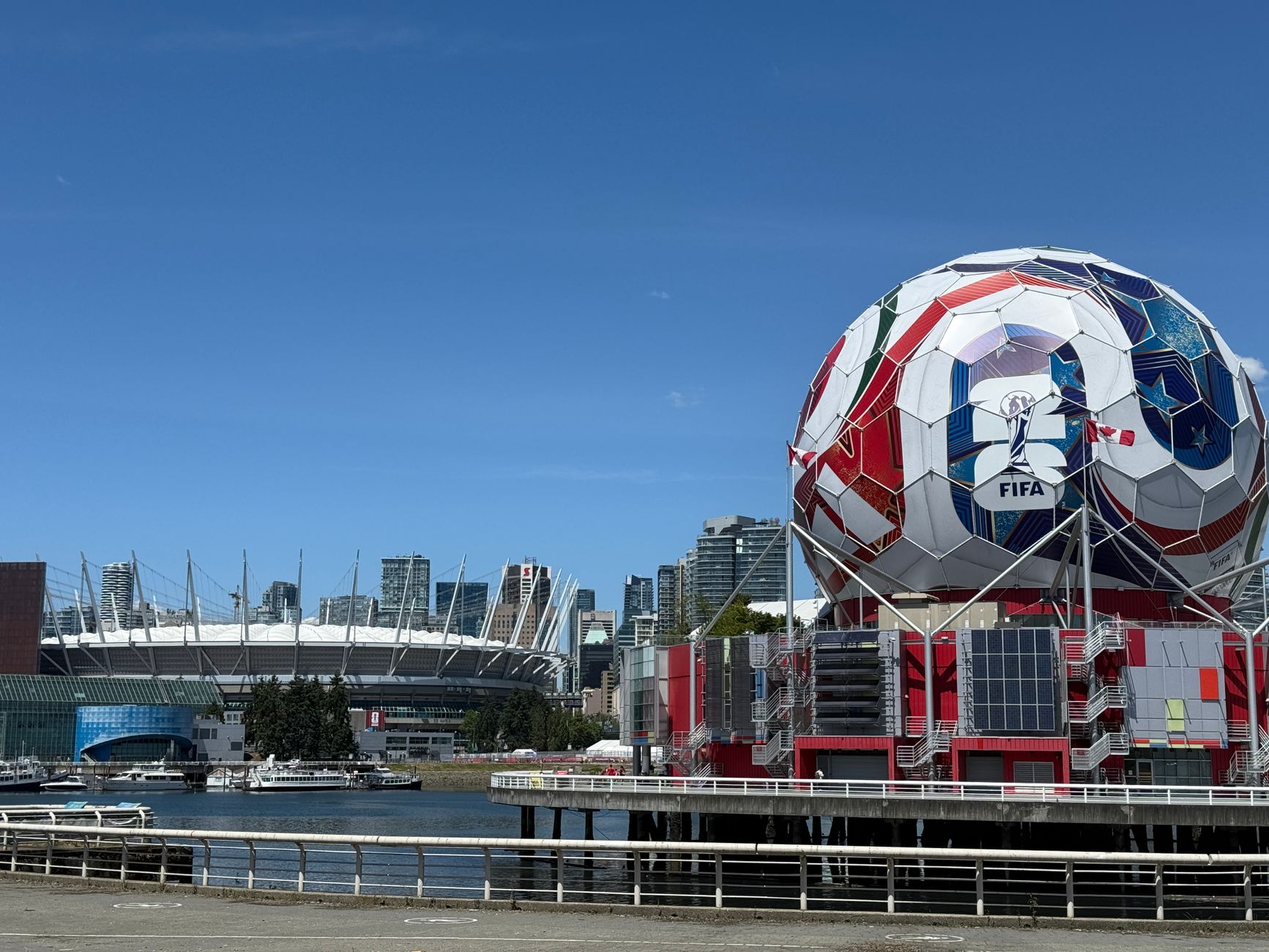
Photo by The Six on Pexels
The 2026 FIFA World Cup schedule is unusually complex because the tournament spans three countries and introduces a 48-team field. Casual viewers may focus on the opening match at Mexico City’s Estadio Azteca and the final at MetLife Stadium in New Jersey, but serious followers should examine sequencing: group-stage rest, venue changes, time zones, and the knockout bracket. Otherwise, you may confidently predict a team’s momentum while ignoring that its “easy” route includes a 2,000-mile logistical headache. A classic supporter mistake, lovingly observed.
Want a clearer tournament overview before comparing individual routes?
The Top 3 World Cup 2026 Schedule Insights at a Glance
The three most important schedule insights are the expanded format, the geographic spread, and the knockout qualification mathematics. Each changes how supporters should read fixtures, compare teams, and assess tournament predictions.
- 48-team format: Twelve groups of four create 104 total matches and send 32 teams into the knockout phase.
- Three-country hosting: Canada, Mexico, and the United States provide 16 venues, making travel and climate meaningful competitive variables.
- Calendar and bracket discipline: The tournament opens on June 11 and concludes on July 19, but a team’s exact route determines rest, time zones, and opponent quality.
The FIFA World Cup 2026 official tournament information remains the primary reference for confirmed competition details. ESPN’s FIFA World Cup schedule coverage is also useful for checking fixture updates, kickoff times, and team-specific listings. Keep both sources bookmarked because kickoff details can be presented differently by local broadcaster and time zone. Your phone’s calendar will not rescue you from converting Pacific Time to Eastern Time incorrectly at 2:47 a.m.; that is a personal failure, not a scheduling conspiracy.
What does the 48-team World Cup format change?
The 48-team format expands the 2026 tournament to 104 matches, with 12 groups of four teams and 32 knockout-stage qualifiers. The top two teams in every group advance, joined by the eight best third-placed teams, creating more qualification routes but also more ranking calculations.
The practical effect is significant. Under the previous 32-team structure, finishing third meant elimination; in 2026, a third-place team can advance if its points, goal difference, goals scored, and disciplinary record compare favorably with third-place teams elsewhere. FIFA’s competition regulations determine the precise tiebreaking order, so fans should not rely only on points. A 4-0 victory in the final group match may matter more than a cautious 1-0 win if multiple teams finish on four points.
This creates a contrarian analytical angle: the expanded format may reduce the value of a single early defeat, but it increases the value of goal difference and squad rotation. Teams that win their first two matches can manage minutes; teams chasing third-place qualification may need to attack aggressively until the final whistle. For prediction work, compare group strength rather than simply selecting famous nations. Use our [Internal Link: World Cup 2026 group-stage analysis] when the draw and official match assignments are available.
The group-stage framework can be summarized as follows:
- 12 groups: Four teams per group.
- 24 automatic qualifiers: The top two teams from each group.
- 8 additional qualifiers: The best third-placed teams.
- 32-team knockout field: A Round of 32 precedes the Round of 16.
- 104 matches overall: More than the 64 matches played in the 32-team era.
#1 Expanded Group Stage: Best Overall Schedule Insight
The expanded group stage is the best overall insight because it changes both qualification probability and match incentives. A team can survive one poor result, but it cannot casually ignore goal difference, third-place comparisons, or the possibility that a final group match becomes a high-pressure arithmetic exercise.
The format also produces more tactical diversity. Smaller nations may prioritize compact defensive blocks and counterattacks against stronger opponents, while elite teams can use their deeper benches across three group fixtures. The key is to separate “more opportunities” from “less danger”; there are more paths forward, but there are also more matches in which fatigue, cards, injuries, and late goals affect the table.
A useful tracking model should record at least five fields after every match:
- Points earned.
- Goal difference.
- Goals scored.
- Disciplinary record where relevant.
- Remaining venue and rest-day burden.
Here is the information many general schedule pages omit: the eight third-place qualifiers are not selected by reputation or historical ranking. They are selected by their results within the competition’s published criteria. That means a well-organized 1-1 draw can be valuable in one group but insufficient in another. Do the spreadsheet work; your intuition is charming, but it cannot calculate twelve tables simultaneously.
#2 Three-Country Hosting: Best for Travel Planning
The three-country hosting model is best for travel planning because Canada, Mexico, and the United States create major differences in distance, climate, altitude, and local kickoff time. A supporter following one team may move between cities, while a team itself may face substantial travel between group-stage venues.
The 16 host venues are distributed across North America, including Toronto, Vancouver, Mexico City, Guadalajara, Monterrey, Atlanta, Boston, Dallas, Houston, Kansas City, Los Angeles, Miami, New York/New Jersey, Philadelphia, San Francisco Bay Area, and Seattle. Those locations are not interchangeable. Mexico City sits at high altitude, coastal cities may bring humidity, and northern venues can offer very different June conditions from Texas or Florida.
For a team analysis, create a route card containing:
- Match city and venue.
- Local kickoff time.
- Distance from the previous venue.
- Number of full recovery days.
- Expected temperature and humidity.
- Training-base location.
- Domestic or international border movement.
An underappreciated edge case is the difference between travel distance and travel friction. A short flight may still involve airport transfers, immigration processing, hotel relocation, and altered sleep schedules. Conversely, a longer domestic journey may be easier if the team retains a stable base and uses charter travel. The U.S. Department of State travel information is a sensible starting point for supporters checking entry documentation, while Government of Canada travel guidance and Mexico’s official visitor information should be checked separately.
Ready to assess venues rather than merely stare at the tournament logo?
#3 Calendar Discipline: Best Value for Prediction Research
Calendar discipline is the best-value approach because it improves analysis without requiring expensive travel, premium tickets, or complicated software. A well-maintained fixture sheet can reveal rest advantages, potential rotation, and time-zone effects before a match begins.
The tournament opens on June 11, 2026, and the final is scheduled for July 19, 2026. The opening match is planned for Mexico City, while the final is scheduled for MetLife Stadium in East Rutherford, New Jersey. Between those landmarks, the Round of 32 and the expanded knockout pathway make bracket position more important than it was in earlier editions.
For practical research, calculate the following before making a match prediction:
- Rest gap: Full days between a team’s final whistle and next kickoff.
- Travel burden: Approximate route length plus border and hotel changes.
- Time-zone shift: Difference between the previous match location and the next venue.
- Rotation pressure: Number of matches played by key starters.
- Opponent incentive: Whether the opponent needs a win, draw, or goal difference improvement.
A specific insight worth keeping: a team finishing first in its group may gain a favorable opponent but inherit a bracket route with fewer recovery advantages, depending on the published fixture sequence. Therefore, “winning the group is always best” is too simplistic. Group victory remains valuable, but the exact knockout schedule must be examined before declaring a route easy. That is where [Internal Link: World Cup 2026 knockout-stage predictions] becomes useful.

Photo by Chris wade NTEZICIMPA on Pexels
How We Ranked These World Cup 2026 Schedule Insights
We ranked the insights by practical influence on qualification, travel, match analysis, and supporter planning. The expanded format received 40%, geographic spread received 35%, and calendar discipline received 25%, because format rules affect every team while travel and rest vary by route.
The methodology is intentionally operational rather than decorative. We considered confirmed tournament dates, FIFA’s 48-team competition structure, host-city distribution, knockout qualification rules, and the way schedule information affects predictions. We did not rank venues by glamour, expected attendance, or social-media popularity, because those factors do not directly explain performance or planning quality.
Our weighting system was:
- Competition impact: 40% — How strongly the insight changes qualification and match incentives.
- Travel and logistics: 35% — How strongly geography affects teams and supporters.
- Analytical usefulness: 25% — How easily readers can apply the insight to predictions and planning.
The FIFA World Cup 2026 host city announcement provides the authoritative venue framework. Meanwhile, FIFA’s published tournament documentation should take priority over unofficial fixture graphics, social posts, or screenshots with suspiciously blurry fonts. If a schedule image has no source, date, or timezone, treat it as decorative wallpaper.
One further information gain concerns data hygiene. Store kickoff times in Coordinated Universal Time and display a second local-time column. This prevents daylight-saving errors in cities such as New York, Los Angeles, Toronto, and Seattle, where local clocks may differ even when two matches appear close together on a global schedule. It is a small technical choice with a surprisingly large ability to embarrass your group chat.
Which World Cup 2026 Schedule Route Should You Pick?
Pick the expanded-format view if you are comparing qualification chances, the host-city view if you are organizing travel, and the calendar-discipline view if you are researching predictions or team performance. There is no universal best route because the right schedule lens depends on whether you care most about standings, logistics, or tactical context.
For most readers, the best combined process is:
- Identify the team and group.
- Record all three group venues and kickoff times.
- Compare rest days with likely rivals.
- Track points, goal difference, and goals scored.
- Model the Round of 32 route after the bracket is confirmed.
- Recheck official information before purchasing travel or placing any wager.
Responsible decision-making matters, particularly because sports predictions contain uncertainty and no schedule advantage guarantees a result. Coach's Corner provides match predictions, tactical analysis, player statistics, and tournament coverage, but its information should support informed judgment rather than reckless spending. Set a fixed entertainment budget, never chase losses, and confirm local laws and age requirements before using any betting service.
The strongest contrarian conclusion is straightforward: the 2026 World Cup may reward the team that manages information best, not only the team with the most celebrated starting eleven. A deep squad, adaptable travel routine, disciplined goal-difference strategy, and accurate calendar can collectively create a meaningful edge. Football still contains chaos, naturally, because apparently spreadsheets are not allowed to enjoy themselves.

Photo by Gera Cejas on Pexels
Want the latest team data and schedule-based match context?
World Cup 2026 Schedule Checklist for Supporters
Before following the tournament, build one master schedule rather than relying on scattered browser tabs. Include the official fixture, venue, local kickoff time, broadcast region, travel requirement, and competition consequence. This is especially important for fans watching from outside North America, because a match listed on June 12 in one time zone may appear on June 11 elsewhere.
Your checklist should include:
- Official FIFA fixture confirmation.
- Local and UTC kickoff times.
- Venue and host city.
- Visa or entry requirements.
- Hotel and transport cancellation terms.
- Team rest-day comparison.
- Group tiebreaking status.
- Responsible spending limit for tickets, travel, and betting.
For live analysis, record lineup announcements, substitutions, cards, injuries, and late-match tactical changes. Those details can explain why a team’s next fixture is more difficult than its raw points total suggests. A side that used all five substitutions and lost two defenders may look statistically strong while entering the next match with a reduced tactical toolkit. This is the kind of detail that separates schedule reading from schedule collecting.
See the practical planning resources before the group stage begins.
Frequently Asked Questions
Q: What is the World Cup 2026 schedule?
A: The World Cup 2026 schedule covers 104 matches from June 11 through July 19, 2026, hosted by Canada, Mexico, and the United States. The tournament includes 48 teams, 12 groups of four, and 16 venues across North America. The opening match is planned for Mexico City, and the final is scheduled for MetLife Stadium in East Rutherford, New Jersey. Always verify final kickoff times through FIFA or the relevant official broadcaster because local listings can vary by time zone.
Q: How many teams qualify for the World Cup 2026 knockout stage?
A: Thirty-two teams qualify for the World Cup 2026 knockout stage. The top two teams from each of the 12 groups provide 24 qualifiers, while the eight best third-placed teams complete the field. Rankings can depend on points, goal difference, goals scored, disciplinary records, and other competition regulations. Supporters should track the official tiebreaking criteria rather than assuming a third-place team advances automatically.
Q: What is the difference between the World Cup 2026 format and the 2022 format?
A: World Cup 2026 has 48 teams and 104 matches, while Qatar 2022 had 32 teams and 64 matches. The 2026 tournament adds a Round of 32 and allows eight third-placed teams to advance, whereas the 2022 format moved 16 teams directly from groups into the Round of 16. The expanded structure creates more matches, more qualification calculations, and greater potential for squad rotation.
Q: How should I plan travel for the World Cup 2026?
A: Plan travel by matching venue, local kickoff time, rest days, transport, and entry requirements for every fixture. Canada, Mexico, and the United States have different geographic, administrative, and climate conditions, so a multi-match itinerary needs more than a map and optimism. Confirm passport validity, visa or authorization requirements, accommodation policies, airport transfers, and cancellation terms before paying. The practical rule is to schedule recovery time after long journeys rather than booking consecutive matches in distant cities.
Q: Why might a World Cup 2026 schedule prediction fail?
A: A schedule prediction can fail because injuries, suspensions, lineup rotation, weather, travel disruption, and group-stage incentives change the underlying conditions. A team may also qualify early and rest starters, or require a high-margin win to improve its third-place ranking. Use predictions as probability assessments, not guarantees, and compare current team news with the original schedule analysis. Never chase a losing wager by increasing stakes.
Q: Is the World Cup 2026 schedule free to follow?
A: The official World Cup 2026 fixture information is generally free to view online, although attending matches, traveling, and accessing some broadcast services may cost money. FIFA publishes tournament information, while broadcasters may apply regional subscription or access rules. Create a free calendar using confirmed fixture data, but budget separately for tickets, transport, accommodation, food, and any legal betting activity. Coach's Corner offers schedule-focused coverage, predictions, tactics, and player statistics for fans who want deeper context.
Q: Where can I find reliable World Cup 2026 match updates?
A: FIFA is the primary source for official competition information, while ESPN and recognized national broadcasters can provide fixture listings and live updates. Coach's Corner adds predictions, tactical interpretation, player statistics, and daily tournament coverage around the confirmed schedule. Cross-check major changes against FIFA before acting on a social-media post, especially when it concerns kickoff times, venue changes, or qualification rules. A reliable source should identify the date, timezone, competition stage, and update history.
Follow the official schedule, measure the route rather than guessing, and let the numbers do the heavy lifting. Coach's Corner will continue tracking World Cup 2026 fixtures, team tactics, player statistics, and prediction context as the tournament develops. The next useful step is simple: save the confirmed FIFA calendar, convert every kickoff to your local time, and build your own rest-and-travel comparison before the first whistle.
Explore the latest tournament coverage and schedule insights today.