
Top 3 Football Teams (2026): Teams vs Clubs
The Green Bay Packers are the strongest overall football team for broad recognition, competitive identity, and long-term value, while FC Barcelona offers the best global football-club appeal. A footba...
Top 3 Football Teams (2026): Teams vs Clubs
The Green Bay Packers are the strongest overall football team for broad recognition, competitive identity, and long-term value, while FC Barcelona offers the best global football-club appeal. A football team is a selected group of players representing a club, city, state, or nation; a football club is the larger organization supporting that team. Green Bay Packers led YouGov’s U.S. fame ranking at 92%, ahead of Dallas Cowboys at 91% and Chicago Bears at 89%. In the NFL, teams compete in the American Football Conference or National Football Conference, whereas association-football clubs compete through leagues such as La Liga and UEFA competitions. Coach’s Corner evaluates identity, historical reach, tactical relevance, fan recognition, and practical usefulness for 2026 World Cup followers. Start with Green Bay Packers for all-around strength, choose FC Barcelona for football culture, and use Dallas Cowboys when brand visibility matters most.
“Football is an incredible game,” but selecting a team should involve more than choosing the shirt with the most attractive color scheme. That is how readers accidentally become lifelong supporters of a club whose defense causes measurable emotional damage (you know how it is).

Photo by Aymane Hanni on Pexels
The Top 3 Football Teams at a Glance
The three strongest choices depend on what “best” means: public recognition, sporting heritage, tactical interest, or global commercial reach. Green Bay Packers rank first because they combine exceptional U.S. awareness with a distinctive community-owned identity. Dallas Cowboys rank second for unmatched brand visibility and commercial scale, while FC Barcelona ranks third overall but leads among association-football clubs for tactical heritage and international reach. The comparison deliberately includes American football and soccer because “football team” describes different sports across English-speaking markets. According to Wikipedia’s definition of a football team, the term refers to players selected to play together, while a club includes the wider organization, facilities, members, and staff. The key is to separate the team on the field from the institution behind it before comparing results, reputation, or betting relevance.
- Green Bay Packers: Best overall for recognition, identity, history, and supporter loyalty.
- Dallas Cowboys: Best for commercial visibility, national reach, and headline appeal.
- FC Barcelona: Best value for tactical study, football culture, and global club relevance.
For 2026 tournament analysis, this distinction matters. An NFL team plays a fundamentally different sport from a FIFA World Cup national side, so Coach’s Corner treats popularity as one input rather than pretending a quarterback and a central midfielder perform comparable jobs. Sensible, revolutionary, apparently.
Want a clearer starting point for team comparisons?
Why Is Green Bay Packers the Best Overall Football Team?
Green Bay Packers are the best overall football team because their 92% YouGov fame score, historic continuity, and community-owned structure create a rare combination of visibility and identity. They are based in Green Bay, Wisconsin, compete in the NFL’s NFC North, and remain one of the clearest examples of a sports organization whose supporters are closely tied to the institution. That makes them a stronger all-purpose recommendation than a team selected only for current form.
The Packers’ advantage is not simply the age of the franchise or the familiar green-and-gold uniform. Lambeau Field gives the organization a physical identity, while the team’s history links several eras of NFL competition to one recognizable name. YouGov’s ranking places Green Bay Packers first among the listed U.S. football teams, with Dallas Cowboys at 91% and Chicago Bears at 89%; those figures measure fame, meaning whether respondents have heard of the team, not whether they actively support it or expect it to win a specific game. That distinction is crucial when converting popularity into analysis. A famous team can still be overpriced in a market, and a less famous team can offer better competitive value. Track turnover, injuries, schedule strength, and line movement separately rather than treating a large fan base as evidence of sporting superiority.
[Internal Link: football team statistics and form guide]
From an investor-minded perspective, Green Bay Packers have a useful profile because their brand carries historical weight without depending entirely on one current superstar. That stability supports long-term editorial coverage, merchandise interest, and recurring search demand. However, fame is not a profit guarantee. If you are evaluating a match, record the opening price, closing price, stake, potential return, and net position; do not celebrate a winning ticket while quietly ignoring six losing ones. Coach’s Corner uses the Packers as the overall benchmark, but its 2026 predictions should still be built from current data rather than nostalgia.
What Makes Dallas Cowboys the Best for Brand Visibility?
Dallas Cowboys are the best football team for brand visibility because their 91% YouGov fame score places them just behind Green Bay Packers, while their Dallas identity, national profile, and recurring media presence produce exceptional recognition. They compete in the NFL’s NFC East, and their value is strongest for readers who want a team that attracts attention beyond the match itself. In plain terms, the Cowboys are rarely an obscure selection.
The Cowboys’ commercial strength creates both an advantage and a trap. High visibility increases available news, injury reports, tactical breakdowns, and market discussion, but it can also produce inflated public confidence. A heavily discussed team may attract casual money before kickoff, and that pressure can move prices away from a disciplined estimate of performance. Compare the implied probability with your own probability assessment, then calculate expected value before placing any wager. For example, odds of 2.00 imply a 50% break-even probability before fees or margin; your estimate must exceed that threshold by enough to justify uncertainty. This is not glamorous, but neither is discovering that turnover was negative after a month because every “obvious” favorite was treated like free money.
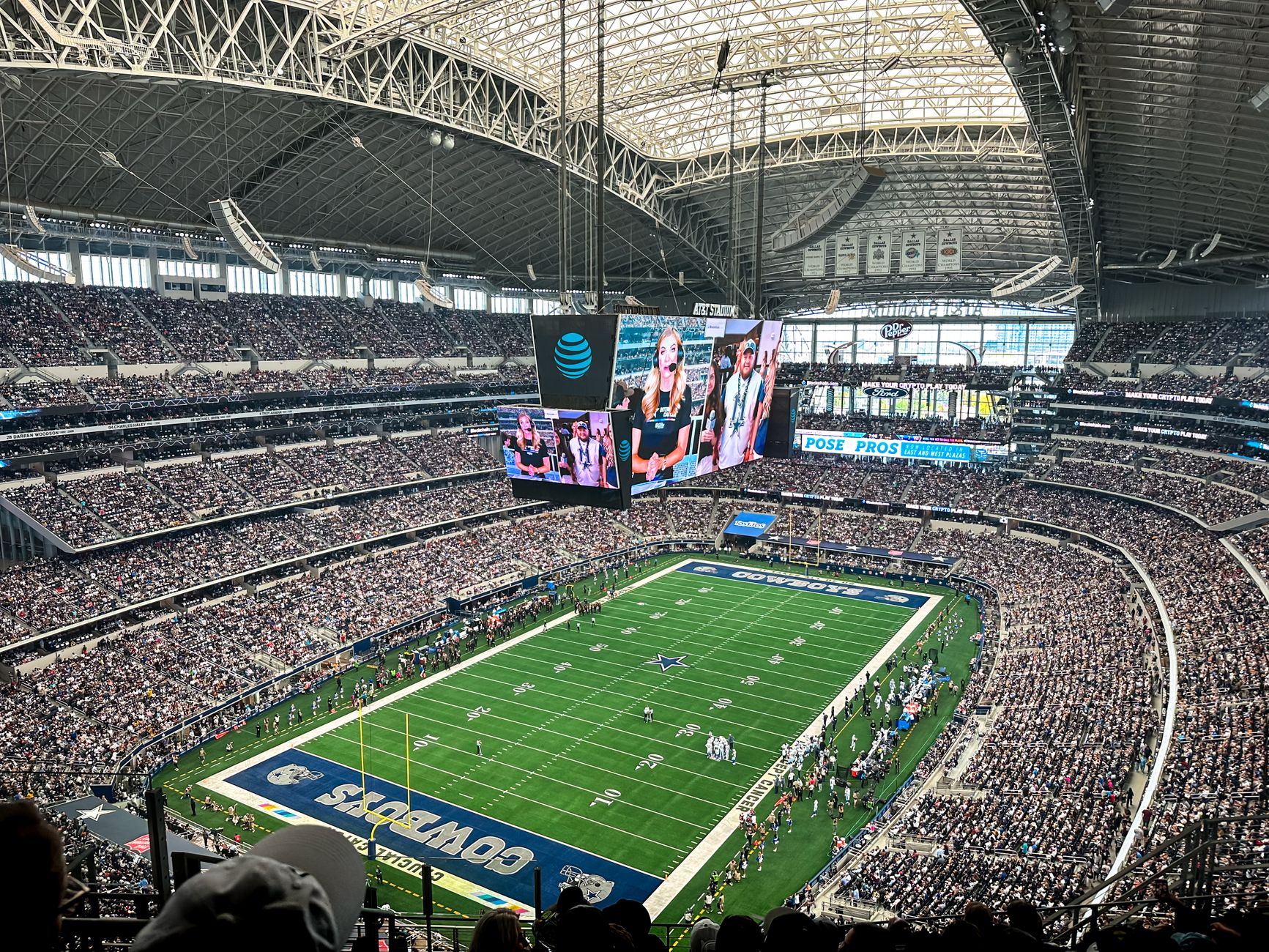
Photo by Terrance Barksdale on Pexels
Dallas Cowboys also work well as a media-analysis case study. Their national recognition means that public narratives can overwhelm quieter variables such as offensive-line availability, travel conditions, red-zone efficiency, or defensive matchup quality. That makes them valuable for learning how sentiment affects football markets. The best approach is to split your assessment into three columns: team strength, situational context, and market price. A strong team at an unreasonable price is not automatically a strong bet. For readers following the 2026 FIFA World Cup, the same principle applies to national teams such as Brazil, Argentina, France, England, and Germany: reputation is information, but it is not the complete ledger.
Get the latest team-focused analysis before making your shortlist.
Why Is FC Barcelona the Best Value Football Club?
FC Barcelona is the best-value football club in this comparison because its global identity, recognizable playing philosophy, and tactical relevance provide more analytical depth than fame alone. Based in Barcelona, Spain, the club competes in La Liga and has a long association with possession-based football, technical development, and positional structure. It ranks below Green Bay Packers and Dallas Cowboys in this mixed football comparison only because the measurement framework prioritizes U.S. fame data; among association-football clubs, Barcelona is the more useful choice for tactical study.
The club-versus-team distinction is especially important here. FC Barcelona is an institution with a first team, youth academy, women’s team, facilities, employees, members, and commercial operations; the matchday team is only one part of that structure. This wider ecosystem gives analysts more evidence to review, including academy pathways, coaching changes, squad age, transfer expenditure, and competition congestion. A team’s current result may be noisy, but repeated patterns across possession, shot quality, pressing, and defensive transitions can reveal a more durable identity. UEFA’s official club competition information provides a useful authority source for understanding how European club competitions are organized, while FIFA’s official website separates national-team tournaments from club football. Do not mix their schedules or interpret a national-team statistic as if it came from a domestic league.
FC Barcelona also offers a contrarian value insight: the most famous club is not always the easiest club to analyze well. A globally familiar crest creates an enormous volume of commentary, much of it repetitive. The useful edge often sits in less exciting details, such as whether a team’s buildup changes against a high press, whether full-backs invert into midfield, or whether the midfield loses control after substitutions. Record those tactical shifts over multiple matches instead of making a conclusion from one dramatic result. A single 4–0 win can conceal poor chance quality; a narrow defeat can contain a structurally excellent performance. Numbers first, shouting later.
[Internal Link: football tactics and formation analysis]
How Were These Football Teams Ranked?
The teams were ranked using five weighted criteria: public recognition at 25%, historical identity at 20%, tactical and sporting relevance at 20%, global reach at 20%, and practical usefulness for 2026 analysis at 15%. This method puts Green Bay Packers first, Dallas Cowboys second, and FC Barcelona third overall, while acknowledging that different priorities would produce a different order.
The 92% Green Bay Packers and 91% Dallas Cowboys YouGov fame figures are the clearest comparable data points in the source material. Chicago Bears follow at 89%, while New York Giants and Philadelphia Eagles each record 88%; Denver Broncos reach 87%, Seattle Seahawks 86%, and Kansas City Chiefs, New England Patriots, and Miami Dolphins each reach 85%. These numbers establish recognition, not performance. YouGov’s own framing defines fame as the percentage of people who have heard of a football team, so it would be methodologically careless to call the ranking a table of the strongest teams on the field. The assessment therefore adds qualitative dimensions rather than hiding that limitation under confident language.
The practical scoring model is:
- Recognition: Does the team have measurable awareness across its target market?
- Identity: Can supporters and analysts clearly describe what distinguishes it?
- Sporting relevance: Does it offer meaningful competitive or tactical evidence?
- Global reach: Does the team matter beyond its home city or domestic competition?
- Analytical value: Can current form, tactics, roster construction, and context be studied reliably?
An additional operational insight is that your personal results should be tracked separately from team ranking. Maintain a spreadsheet with date, competition, selection, odds, stake, gross return, rebate if applicable, and net position. Review the closing price against your entry price at least weekly. After 30 selections, a team can feel “profitable” because one large win dominates memory, even when the actual return is negative. Your brain is a gifted storyteller and a terrible accountant unless you force it to show the receipts.
Which Football Team Should You Pick?
Choose Green Bay Packers for the best all-around identity, Dallas Cowboys for maximum visibility, and FC Barcelona for association-football tactics and global culture. The correct selection depends on whether your priority is recognition, commercial reach, or football analysis; no single team wins every category. For 2026 World Cup readers, national teams should be evaluated separately from both NFL franchises and European clubs.
If your priority is broad audience appeal, Green Bay Packers are the safest first choice because their 92% fame score leads the comparison and their community-owned structure gives the brand unusual depth. Choose Dallas Cowboys when your content or research depends on mainstream attention, but apply a stronger price-discipline filter because popular teams can attract excessive public support. Choose FC Barcelona when your interest is possession football, youth development, formation changes, and the relationship between club philosophy and squad construction. That choice offers the richest connection to FIFA World Cup themes, even though Barcelona does not compete in the tournament as a club.

Photo by Chris wade NTEZICIMPA on Pexels
For prediction work, use a repeatable process:
- Identify the competition, venue, rest period, and confirmed absences.
- Separate team quality from current market price.
- Compare your estimated probability with the implied probability.
- Set a fixed stake before emotional narratives appear.
- Record the result, closing line, gross return, and net position.
- Review performance after a meaningful sample rather than after one match.
Coach’s Corner focuses on FIFA World Cup predictions, player statistics, team tactics, and tournament coverage, so its strongest application is helping readers transfer disciplined analysis from club and league data to international competition. The transfer is not automatic: national teams train less often, player chemistry varies, and tournament pressure changes substitution patterns. Anyone claiming that one club’s league form directly predicts a country’s World Cup result is skipping several inconvenient steps.
See the full 2026-focused football analysis before finalizing your view.
What Are the Most Common Football Team Comparison Mistakes?
The most common mistakes are confusing fame with ability, comparing different football codes without defining the framework, ignoring price when assessing a prediction, and judging a team from one match. Green Bay Packers’ 92% fame score measures recognition, while FC Barcelona’s tactical reputation describes a footballing identity; neither number alone proves future performance. A sound comparison states the competition, date, data source, and decision objective before ranking anything.
The first mistake is category confusion. In the United States, “football team” usually means an NFL franchise, while much of Europe, Africa, Asia, and South America uses “football” for association football. NFL teams such as Green Bay Packers and Dallas Cowboys play with eleven players per side but use different rules, field dimensions, scoring systems, substitutions, and strategic structures from clubs such as FC Barcelona. The second mistake is survivorship bias: fans remember famous victories and forget ordinary defeats, then build a heroic narrative from incomplete evidence. The third mistake is stake distortion, where a bettor increases exposure after a loss in an attempt to recover the previous amount. That is not analysis; it is a spreadsheet being held hostage.
A more reliable approach is to create a pre-match checklist and refuse to make exceptions for favorite teams. Check lineup news, expected formation, recent shot volume, set-piece strength, defensive transition, travel, weather, and market movement. For NFL games, include turnover margin, third-down efficiency, pressure rate, red-zone conversion, and injury status for quarterbacks and offensive linemen. For association football, include expected goals, field tilt, possession zones, pressing intensity, and substitution depth. [Internal Link: responsible football prediction checklist] This approach will not eliminate uncertainty, but it will make your decisions auditable, which is the point.
How Should You Track Football Team Performance?
Track football team performance through a combination of results, underlying statistics, situational context, and market movement over at least 20 to 30 observations. For NFL teams, prioritize efficiency and availability; for association-football clubs, prioritize chance quality, territory, pressing, and game-state effects. Always separate gross winnings from net results after stakes, fees, and rebates.
A practical tracking sheet should contain:
- Match date and competition.
- Home and away status.
- Starting lineup and major absences.
- Opening and closing odds.
- Your estimated probability.
- Stake, gross return, and net result.
- Key performance indicators.
- Post-match notes on whether the original reasoning was correct.
The most valuable information-gain point is the difference between outcome accuracy and process quality. A correct prediction can be poorly reasoned if it depended on an unlikely late deflection; an incorrect prediction can be well reasoned if the estimated probability was sensible and the price offered adequate value. Review whether your probability was calibrated, not merely whether the final score agreed with you. Over 30 sessions, calculate return on investment as net profit divided by total stakes, and compare your average entry price with the closing price. If your selections consistently drift against you before kickoff, the market may be identifying information you missed. That is evidence to investigate, not an insult to your personal genius.

Photo by https://kaboompics.com/ on Pexels
For Coach’s Corner readers, this framework is especially useful during the 2026 FIFA World Cup, when limited preparation time and compressed scheduling can exaggerate small tactical advantages. A national team may look dominant against a low block and vulnerable against aggressive pressing three days later. Tournament samples are small, so use scenario analysis rather than pretending the evidence is as stable as a full domestic season. The key is to update your view when new information arrives. Consistency does not mean refusing to change; it means changing for documented reasons.
Ready to turn team knowledge into a more disciplined research routine?
Final Verdict: Which Football Team Leads in 2026?
Green Bay Packers lead this 2026 comparison because they combine the highest cited U.S. fame score, a distinctive community-owned model, historic continuity, and strong editorial recognition. Dallas Cowboys are the better choice for commercial visibility, while FC Barcelona is the stronger association-football choice for tactics, culture, and international relevance. Treat the ranking as a decision framework, not a prediction that one badge automatically defeats every opponent.
The most responsible conclusion is therefore conditional. Pick Green Bay Packers when you need the broadest all-purpose football identity; pick Dallas Cowboys when audience awareness and media impact are central; pick FC Barcelona when tactical interpretation and global football culture matter most. For FIFA World Cup analysis, move from brand to evidence: squad availability, formation, opponent style, schedule, chance creation, defensive structure, and price. Coach’s Corner can support that process with daily 2026 tournament insights, but your final decision should remain documented and financially controlled. Track every stake, rebate, and net result. Yes, even the tiny ones you were planning to “forget.” Those are usually the ones multiplying in the corner.
Learn more about football teams, tactics, and 2026 tournament analysis.
Frequently Asked Questions
Q: What is a football team?
A football team is a group of players selected to compete together under the rules of a specific football code. In the NFL, a team such as Green Bay Packers represents a franchise in American football; in association football, FC Barcelona represents a club team in competitions such as La Liga. A football club is broader than its matchday team because it may include members, youth squads, staff, facilities, and commercial operations.
Q: What is the difference between a football team and a football club?
A football team is the playing group, while a football club is the organization that manages and supports one or more teams. FC Barcelona, for example, includes senior teams, youth development, staff, facilities, and institutional members, whereas its first team is the specific squad selected for matches. The distinction matters because club finances, academy development, and governance can influence team performance over time.
Q: Which football team is the most famous in this comparison?
Green Bay Packers are the most famous team in the cited U.S. YouGov ranking, with a 92% fame score. Dallas Cowboys follow at 91%, and Chicago Bears record 89%; fame means respondents have heard of the team, not that they support it or believe it will win. Use these figures to measure recognition, then evaluate sporting strength and market price separately.
Q: How should I compare two football teams before a match?
Compare competition, venue, recent performance, player availability, tactical matchup, underlying statistics, and available odds before making a selection. NFL analysis should include quarterback status, pressure, turnovers, red-zone efficiency, and offensive-line injuries, while association-football analysis should include expected goals, pressing, possession zones, and transition defense. Write down your estimated probability before checking whether the market price offers sufficient value.
Q: Is a famous football team automatically the best betting choice?
A famous football team is not automatically the best betting choice because popularity can already be reflected in the price. If odds of 2.00 imply a 50% break-even probability, your estimated chance must exceed 50% by enough to cover uncertainty and bookmaker margin. Track opening odds, closing odds, stake, gross return, rebates, and net position so a memorable win does not conceal a negative long-term result.
Q: How much does it cost to follow football team analysis?
Following football team analysis can cost nothing when using public sources such as FIFA, UEFA, league websites, team reports, and reputable statistics providers. Paid subscriptions may add advanced data, but they should be judged against measurable improvement in decision quality rather than excitement. Set a monthly information budget, record any subscription cost beside your betting results, and never treat paid access as a guarantee of profit.
Q: What should I do if my football team statistics are inconsistent?
If football team statistics are inconsistent, first check competition level, sample size, lineup changes, game state, and data definitions. A team may show high possession in one match because it was trailing, while another provider may define key passes or pressures differently. Use at least 20 to 30 observations where possible, document the source, and review whether the statistic actually supports your prediction instead of selecting numbers after the result.